Kenya: Part VIII (Mt. Kenya Safari Club)
Apr. 11th, 2011 11:19 pm![[personal profile]](https://www.dreamwidth.org/img/silk/identity/user.png) riontel
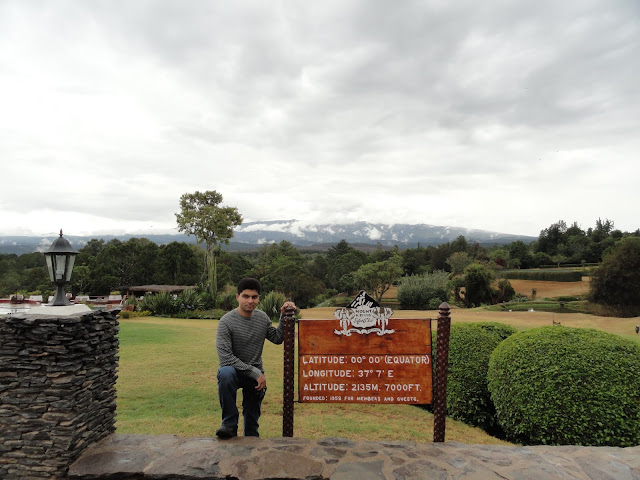
riontelTo get to our next destination, Mount Kenya Safari Club, we had to cross the equator. So, we were driving along and I noticed a sign proclaiming the equator to be right there on that spot. On my request to stop and take a picture I was told, however, that down the road there is a nicer equator. So, here is me on the nicer equator.

The paraphernalia visible next to me is used to demonstrate Coriolis effect. If you step 20ft to the north of the sign the vortex created by the water draining from a funnel will rotate counterclockwise. If you step 20ft to the south, it drains in a clockwise direction. Directly on the equator there will not be any rotation. This was all painstakingly demonstrated to us by one of the locals. He also wanted to give us certificates confirming the momentous occasion of equator crossing but we politely refused.
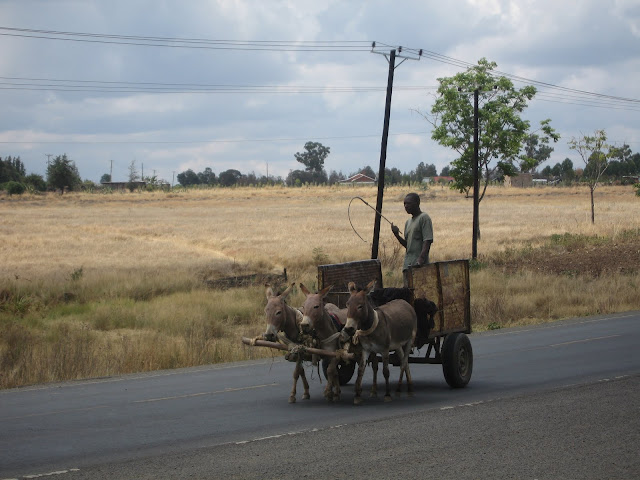
While we were hanging out by the road studying physics I was finally able to capture a very common mode of transportation in Kenya.
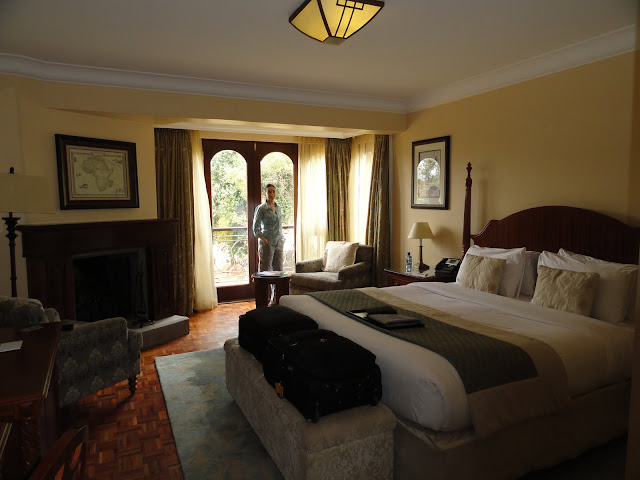
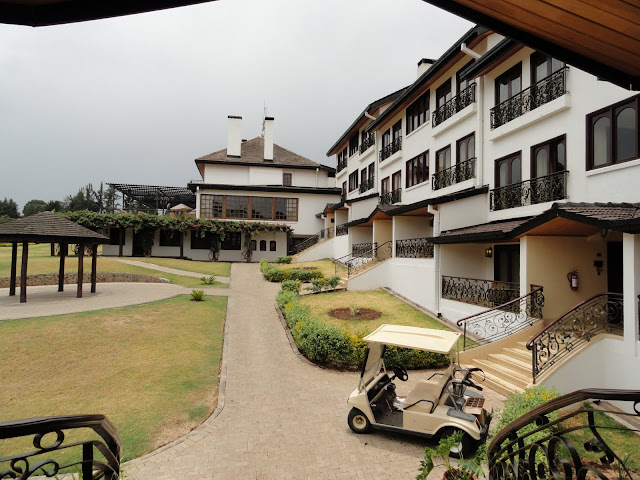
Mt. Kenya Safari Club was quite different from all the places we've visited till then. It is a luxury hotel resort set in acres of beautifully landscaped grounds with manicured gardens and a view of Mount Kenya. If you are lucky. We were only staying overnight and since it was drizzly, foggy and overcast the concern was that the peak would remain hidden in the clouds, as it was when we first arrived mid-day on Friday. The club was originally founded by a Hollywood actor I never heard of, William Holden, and it used to boast its exclusivity and such guests as Winston Churchill and Teddy Roosevelt but now it's owned by some Arabs who are trying to make it more touristy.

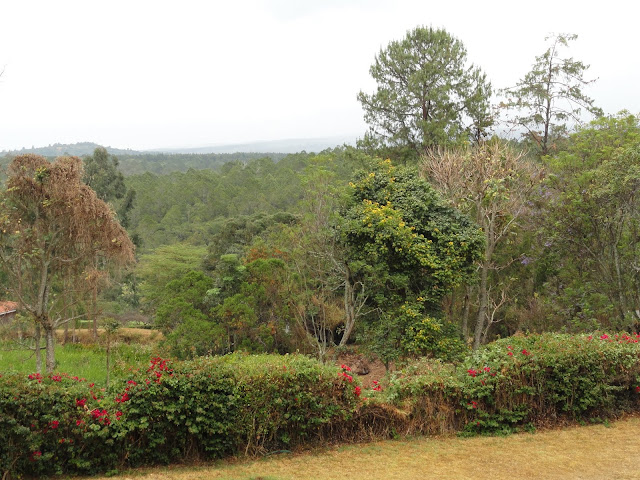
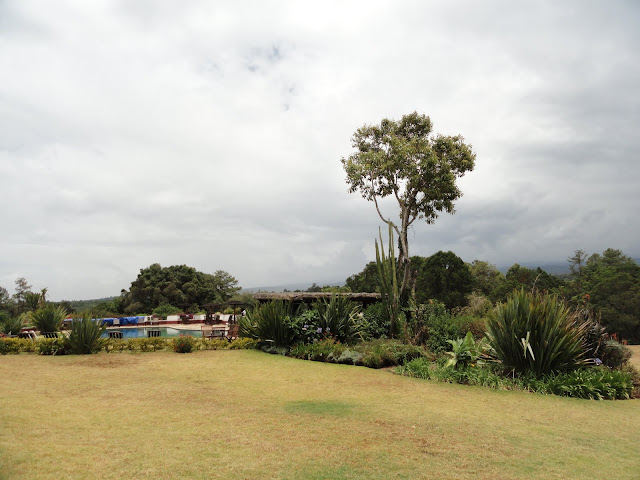
Somewhere behind those clouds is a mountain. Or so N. and his dad kept telling me all day. I maintained firm skepticism and demanded an actual proof, which the weather was not very cooperative in providing.
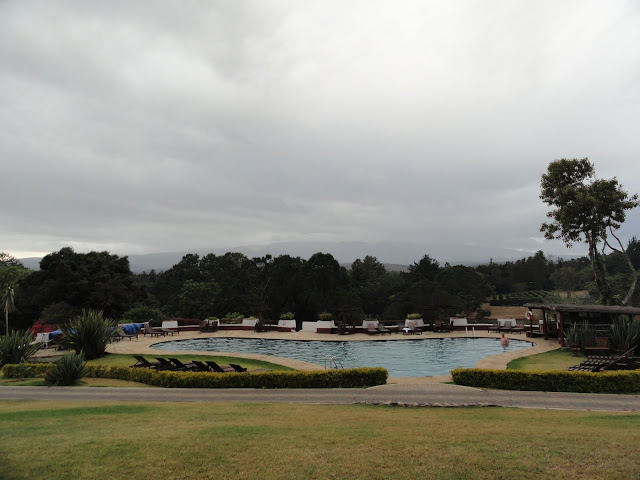
BTW, the pool was supposed to be heated but something wasn't working properly. We asked the one brave soul who took a dip and he said it was freezing. So we skipped the experience.
Area doesn't really offer game drives but there is a national park just outside the resort and we elected to go there on horseback. The other option is a guided walking tour.

At one point during the ride two frisky waterbucks jumped right in front of the horses and got them spooked. Somehow we both managed to keep our seats. We also saw elephant and buffalo droppings but unfortunately not the animals themselves.
Back at theranch resort, after high tea, we took a walk through some more of the grounds, including the golf fields.
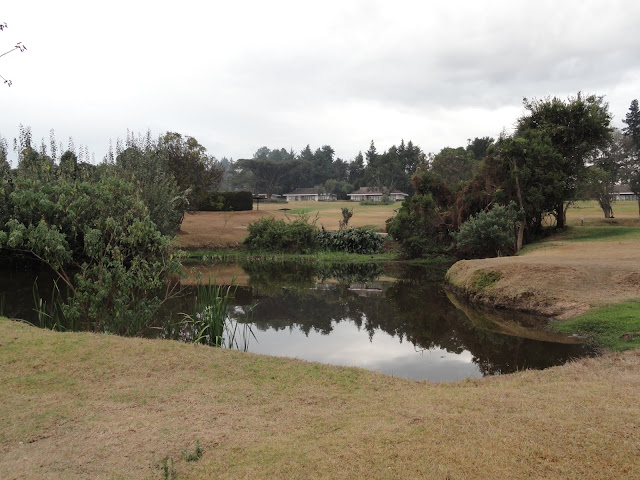
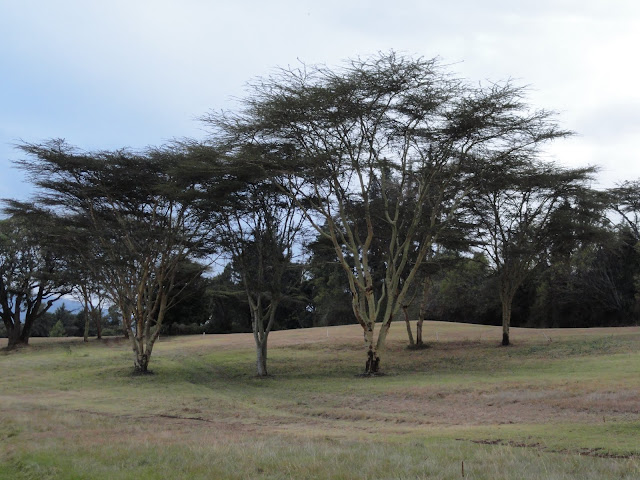
These are acacias, very common trees in Kenya
Next morning, at around 5:30am N. started his attempts to spot Mt. Kenya. First it was dark, then it was dark and rainy, then it was just rainy until it slowly transitioned to light and cloudy. And there it stopped, until around breakfast time when it started to slightly clear up giving all of us some hope. And finally while we were having breakfast the clouds parted for about fifteen minutes and we abandoned everything to take in the sight of the still somewhat snowcapped Batian, highest peak of Mt. Kenya.
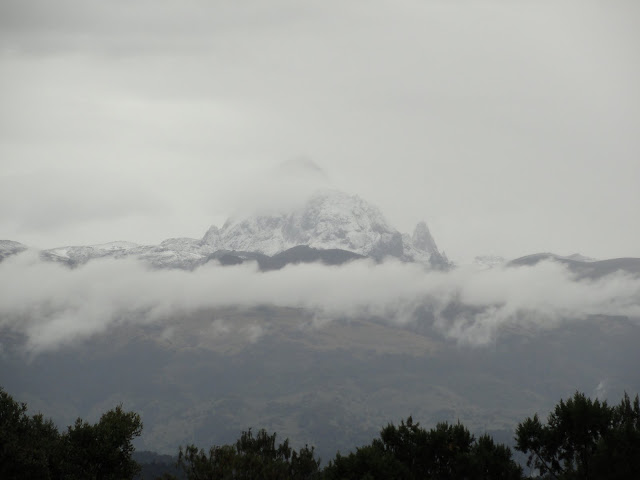
Batian rises up to 17,057 ft.
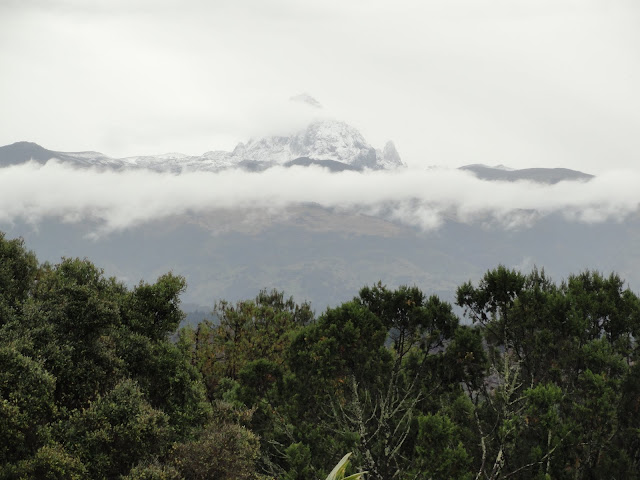
The snow here has been melting and disappearing just as on top of Mt. Kilimanjaro.
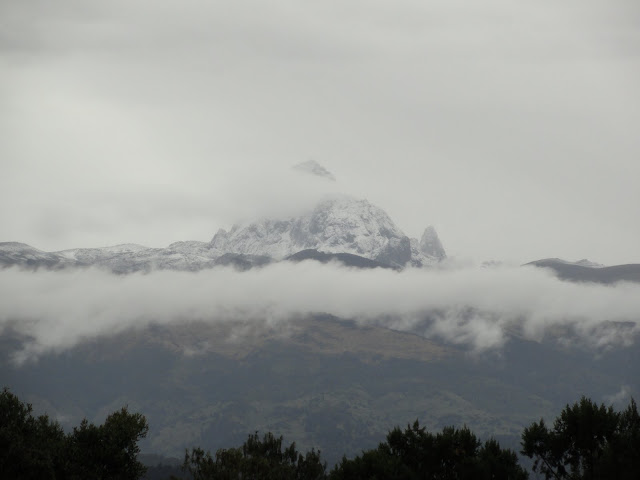
By the time the breakfast was done so was the brief appearance of the mountain peak.
The Mount Kenya Wildlife Conservancy is adjacent to the resort and we stopped by before heading back to Nairobi. We had to be in Nairobi for dinner with some relatives otherwise we would have spent more than the two hours we stayed at the animal orphanage. It was better than any zoo I've ever been to. First of all, many of the animals walk free around the grounds. You can see them up close, touch them, and feed them, if you want. Secondly, you get a personalized guided tour from one of the staff, and they tell you a story of each animal, where it came from and how it ended up in an orphanage.
This is a male suni (N. just loves their name, for obvious reasons), dwarf antelope, smallest of all the antelopes, behind even the dik-dik, they are only 12-16 in hight and extremely cute.
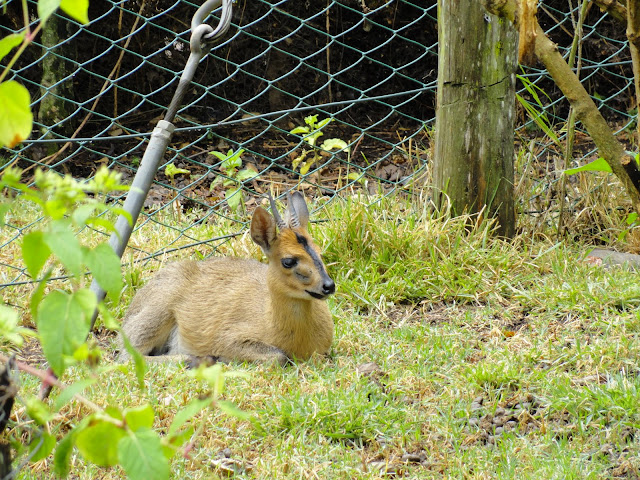
Female suni
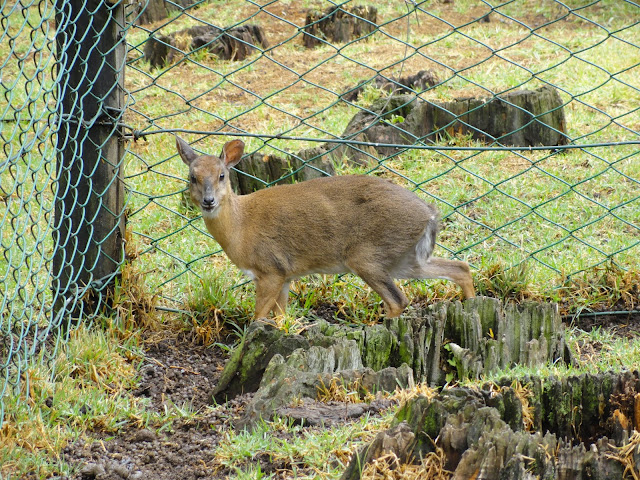
Baby suni
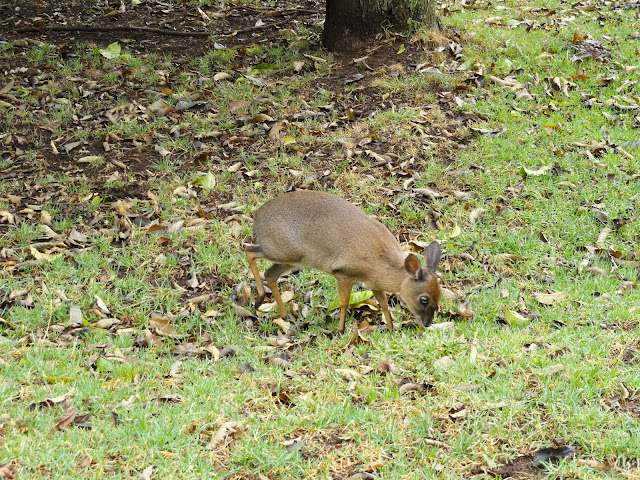
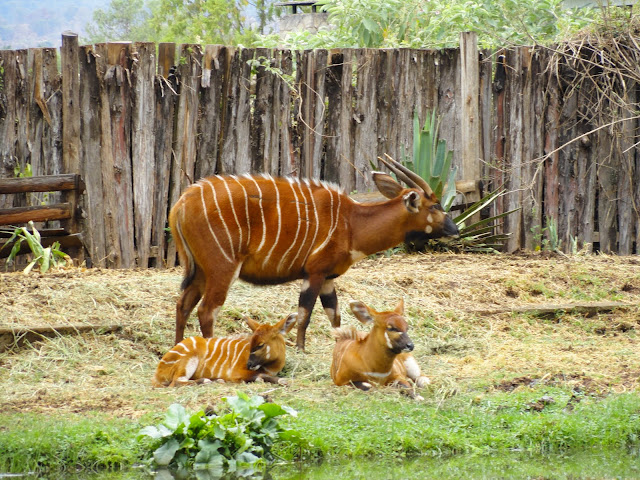
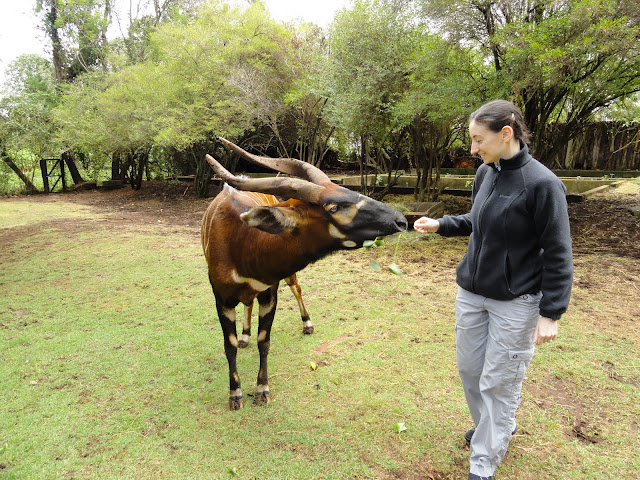
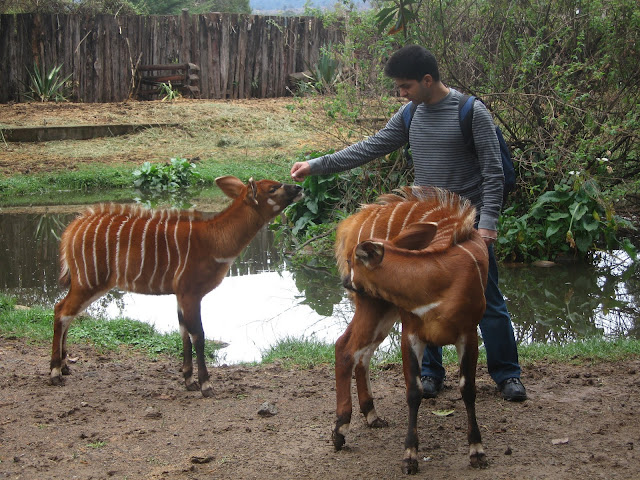
Bongo, on the other hand, is one of the largest antelopes. They used to inhabit areas on the slopes of Mt. Kenya but their population has completely disappeared and now there is an ongoing effort, Bongo Restoration to Mount Kenya Project, aimed to rectify that.
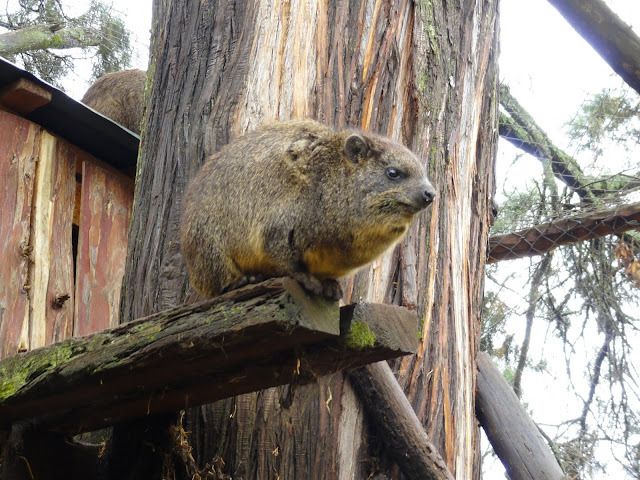
It's hard to believe but this is hyrax, one of the closest relatives of elephants.
Patas monkeys, also known as Red hussar monkeys were very serious, not exhibiting usual monkey behavior.
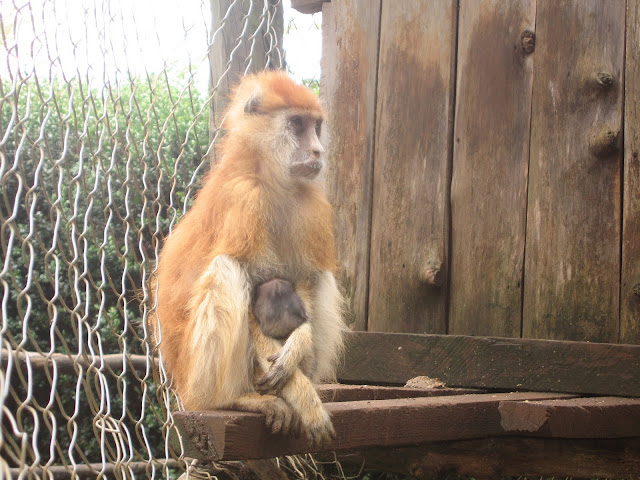

Their dour demeanor was amply compensated by other, more congenial residents.
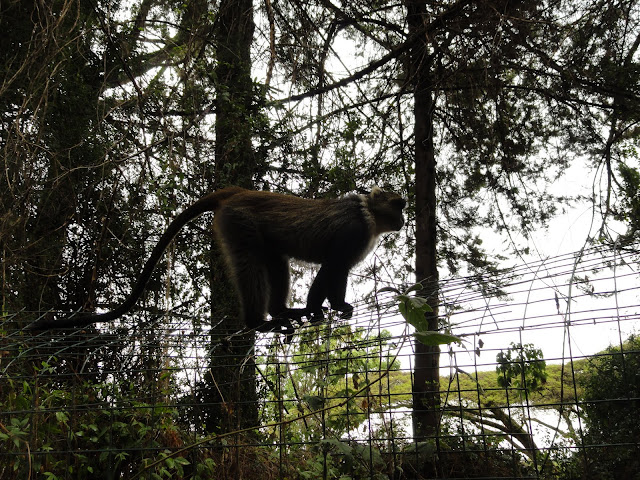
Playful Sykes' monkey kept following us around everywhere until we played with it and fed it some corn

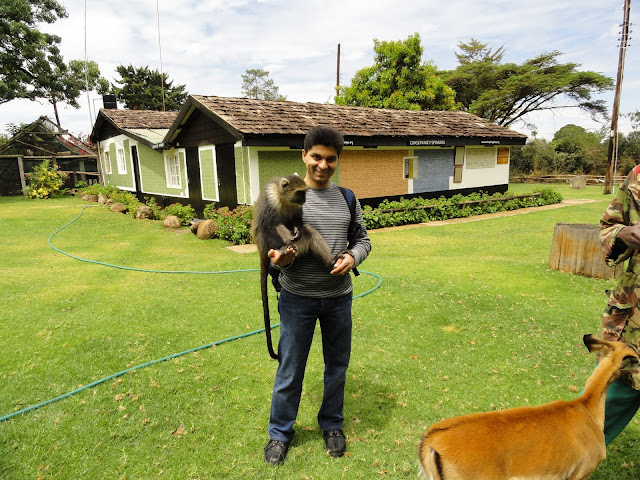
3-months old baby impala creatively named Bambi allowed us to pet it in exchange for treats. I am grinning like a fool because its soft lips feel very ticklish on my palm.

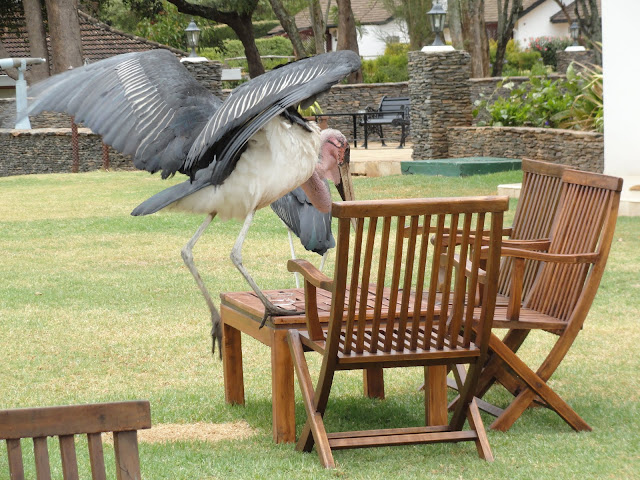
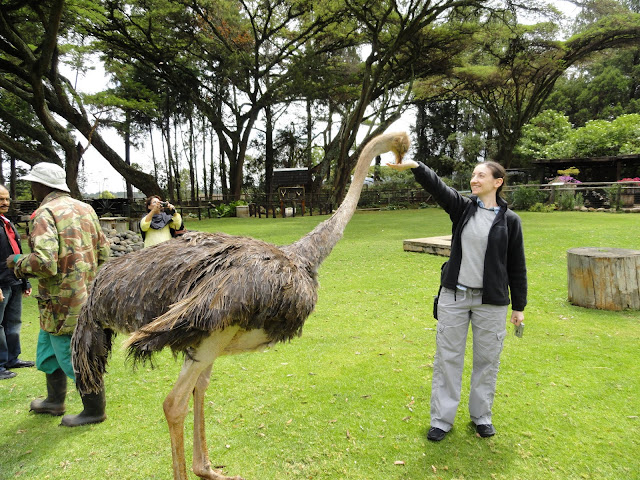
Next an ostrich came by
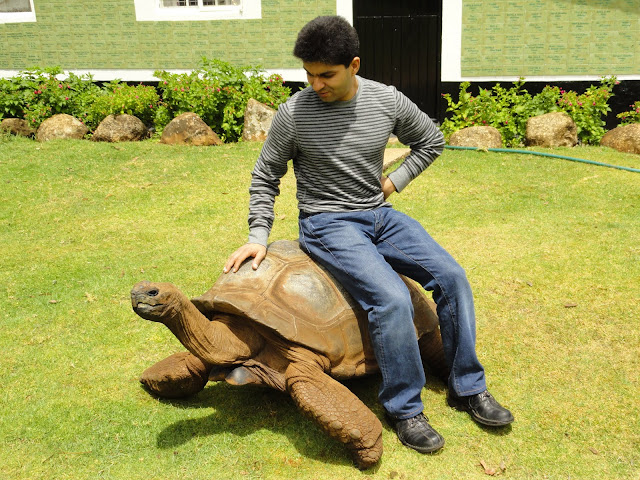
If you get tired and have no respect for your elders you can sit on this 150-year old tortoise
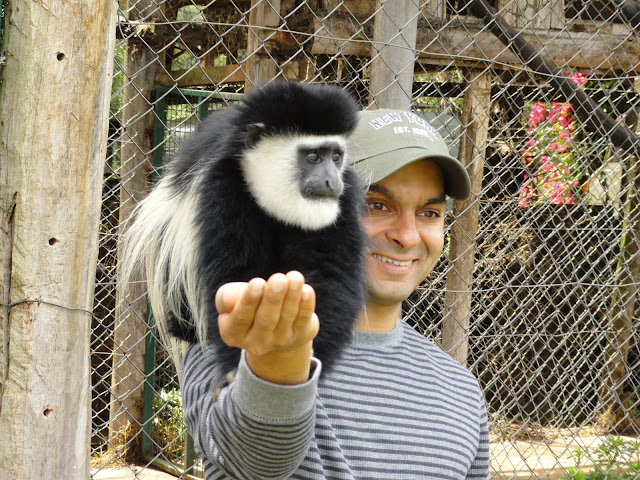
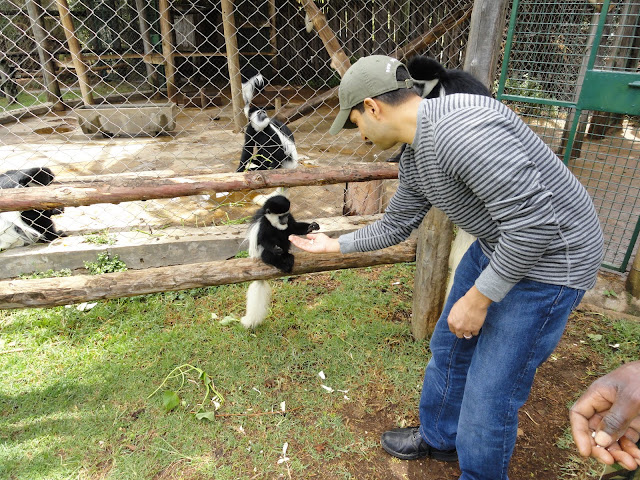
You are only allowed to pet young Eastern Black-and-white Colobus monkeys, as adults they are not too friendly to humans. This is one of the monkeys that doesn't have a prehensile tail it has a nice hanging bushy tail.
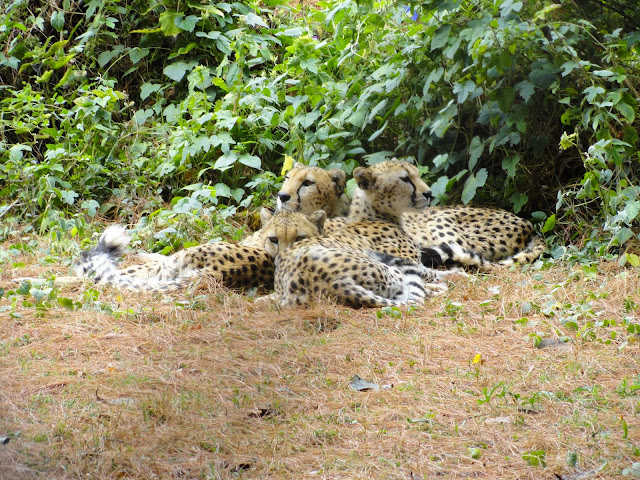
Other animals housed in the orphanage included a family of cheetah siblings
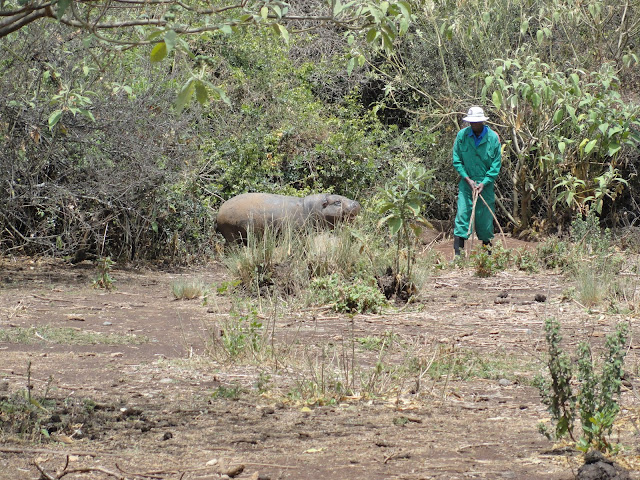
A pygmy hippo which the keeper had to forcefully get out of its slumber, which the nocturnal creature was none too happy about. It refused to come any nearer to us. This species of hippo is not indigenous to Kenya.
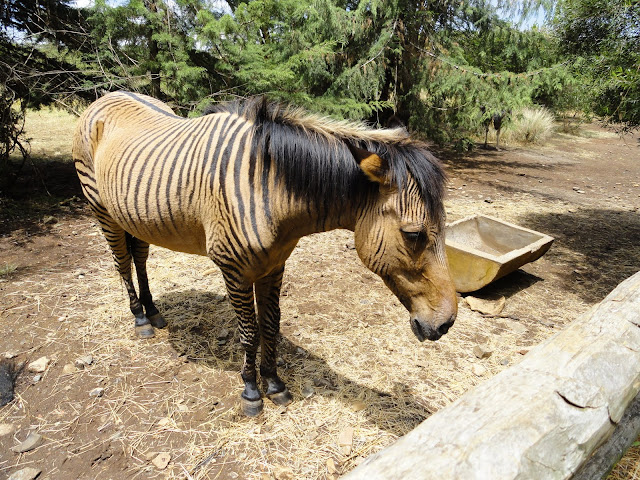
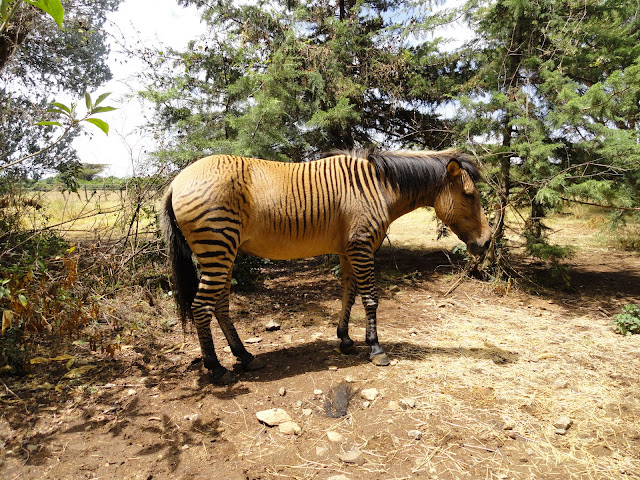
And a rare animal that occurs mostly in captivity: a zebroid. This particular specimen was a cross between a Gravy's zebra and a horse, but the name is used for any offspring of a zebra and another equine.
Surprisingly there were also few llamas wondering around. Apparently somebody decided Africa didn't have enough variety and introduced a new species.
We could have kept on wondering around the orphanage but we had to be in Nairobi by dinner so we said our goodbyes, got in the car and got back on the road. It's not a long drive, only about three hours, and as you drive in what basically is a ditch you can observe massive road construction projects, Chinese are building up Kenyan infrastructure. Maybe next time we go we'll actually be able to drive on a pavement.
The paraphernalia visible next to me is used to demonstrate Coriolis effect. If you step 20ft to the north of the sign the vortex created by the water draining from a funnel will rotate counterclockwise. If you step 20ft to the south, it drains in a clockwise direction. Directly on the equator there will not be any rotation. This was all painstakingly demonstrated to us by one of the locals. He also wanted to give us certificates confirming the momentous occasion of equator crossing but we politely refused.
While we were hanging out by the road studying physics I was finally able to capture a very common mode of transportation in Kenya.
Mt. Kenya Safari Club was quite different from all the places we've visited till then. It is a luxury hotel resort set in acres of beautifully landscaped grounds with manicured gardens and a view of Mount Kenya. If you are lucky. We were only staying overnight and since it was drizzly, foggy and overcast the concern was that the peak would remain hidden in the clouds, as it was when we first arrived mid-day on Friday. The club was originally founded by a Hollywood actor I never heard of, William Holden, and it used to boast its exclusivity and such guests as Winston Churchill and Teddy Roosevelt but now it's owned by some Arabs who are trying to make it more touristy.
Somewhere behind those clouds is a mountain. Or so N. and his dad kept telling me all day. I maintained firm skepticism and demanded an actual proof, which the weather was not very cooperative in providing.
BTW, the pool was supposed to be heated but something wasn't working properly. We asked the one brave soul who took a dip and he said it was freezing. So we skipped the experience.
Area doesn't really offer game drives but there is a national park just outside the resort and we elected to go there on horseback. The other option is a guided walking tour.
At one point during the ride two frisky waterbucks jumped right in front of the horses and got them spooked. Somehow we both managed to keep our seats. We also saw elephant and buffalo droppings but unfortunately not the animals themselves.
Back at the
These are acacias, very common trees in Kenya
Next morning, at around 5:30am N. started his attempts to spot Mt. Kenya. First it was dark, then it was dark and rainy, then it was just rainy until it slowly transitioned to light and cloudy. And there it stopped, until around breakfast time when it started to slightly clear up giving all of us some hope. And finally while we were having breakfast the clouds parted for about fifteen minutes and we abandoned everything to take in the sight of the still somewhat snowcapped Batian, highest peak of Mt. Kenya.
Batian rises up to 17,057 ft.
The snow here has been melting and disappearing just as on top of Mt. Kilimanjaro.
By the time the breakfast was done so was the brief appearance of the mountain peak.
The Mount Kenya Wildlife Conservancy is adjacent to the resort and we stopped by before heading back to Nairobi. We had to be in Nairobi for dinner with some relatives otherwise we would have spent more than the two hours we stayed at the animal orphanage. It was better than any zoo I've ever been to. First of all, many of the animals walk free around the grounds. You can see them up close, touch them, and feed them, if you want. Secondly, you get a personalized guided tour from one of the staff, and they tell you a story of each animal, where it came from and how it ended up in an orphanage.
This is a male suni (N. just loves their name, for obvious reasons), dwarf antelope, smallest of all the antelopes, behind even the dik-dik, they are only 12-16 in hight and extremely cute.
Female suni
Baby suni
Bongo, on the other hand, is one of the largest antelopes. They used to inhabit areas on the slopes of Mt. Kenya but their population has completely disappeared and now there is an ongoing effort, Bongo Restoration to Mount Kenya Project, aimed to rectify that.
It's hard to believe but this is hyrax, one of the closest relatives of elephants.
Patas monkeys, also known as Red hussar monkeys were very serious, not exhibiting usual monkey behavior.
Their dour demeanor was amply compensated by other, more congenial residents.
Playful Sykes' monkey kept following us around everywhere until we played with it and fed it some corn
3-months old baby impala creatively named Bambi allowed us to pet it in exchange for treats. I am grinning like a fool because its soft lips feel very ticklish on my palm.
Next an ostrich came by
If you get tired and have no respect for your elders you can sit on this 150-year old tortoise
You are only allowed to pet young Eastern Black-and-white Colobus monkeys, as adults they are not too friendly to humans. This is one of the monkeys that doesn't have a prehensile tail it has a nice hanging bushy tail.
Other animals housed in the orphanage included a family of cheetah siblings
A pygmy hippo which the keeper had to forcefully get out of its slumber, which the nocturnal creature was none too happy about. It refused to come any nearer to us. This species of hippo is not indigenous to Kenya.
And a rare animal that occurs mostly in captivity: a zebroid. This particular specimen was a cross between a Gravy's zebra and a horse, but the name is used for any offspring of a zebra and another equine.
Surprisingly there were also few llamas wondering around. Apparently somebody decided Africa didn't have enough variety and introduced a new species.
We could have kept on wondering around the orphanage but we had to be in Nairobi by dinner so we said our goodbyes, got in the car and got back on the road. It's not a long drive, only about three hours, and as you drive in what basically is a ditch you can observe massive road construction projects, Chinese are building up Kenyan infrastructure. Maybe next time we go we'll actually be able to drive on a pavement.


![[identity profile]](https://www.dreamwidth.org/img/silk/identity/openid.png)
no subject
Date: 2011-04-12 03:46 am (UTC)no subject
Date: 2011-04-12 04:43 am (UTC)no subject
Date: 2011-04-12 06:17 pm (UTC)no subject
Date: 2011-04-12 06:41 pm (UTC)no subject
Date: 2011-04-12 07:17 pm (UTC)no subject
Date: 2011-04-12 07:20 pm (UTC)no subject
Date: 2011-04-12 07:50 pm (UTC)no subject
Date: 2011-04-12 07:51 pm (UTC)no subject
Date: 2011-04-12 07:52 pm (UTC)Ушло.
no subject
Date: 2011-04-12 07:55 pm (UTC)Зверушки так ваще, обезьяныш особенно, которого ты кормишь. И птах на столе. И все рогатые. И вообще хочу в Кению...
no subject
Date: 2011-04-12 08:43 pm (UTC)